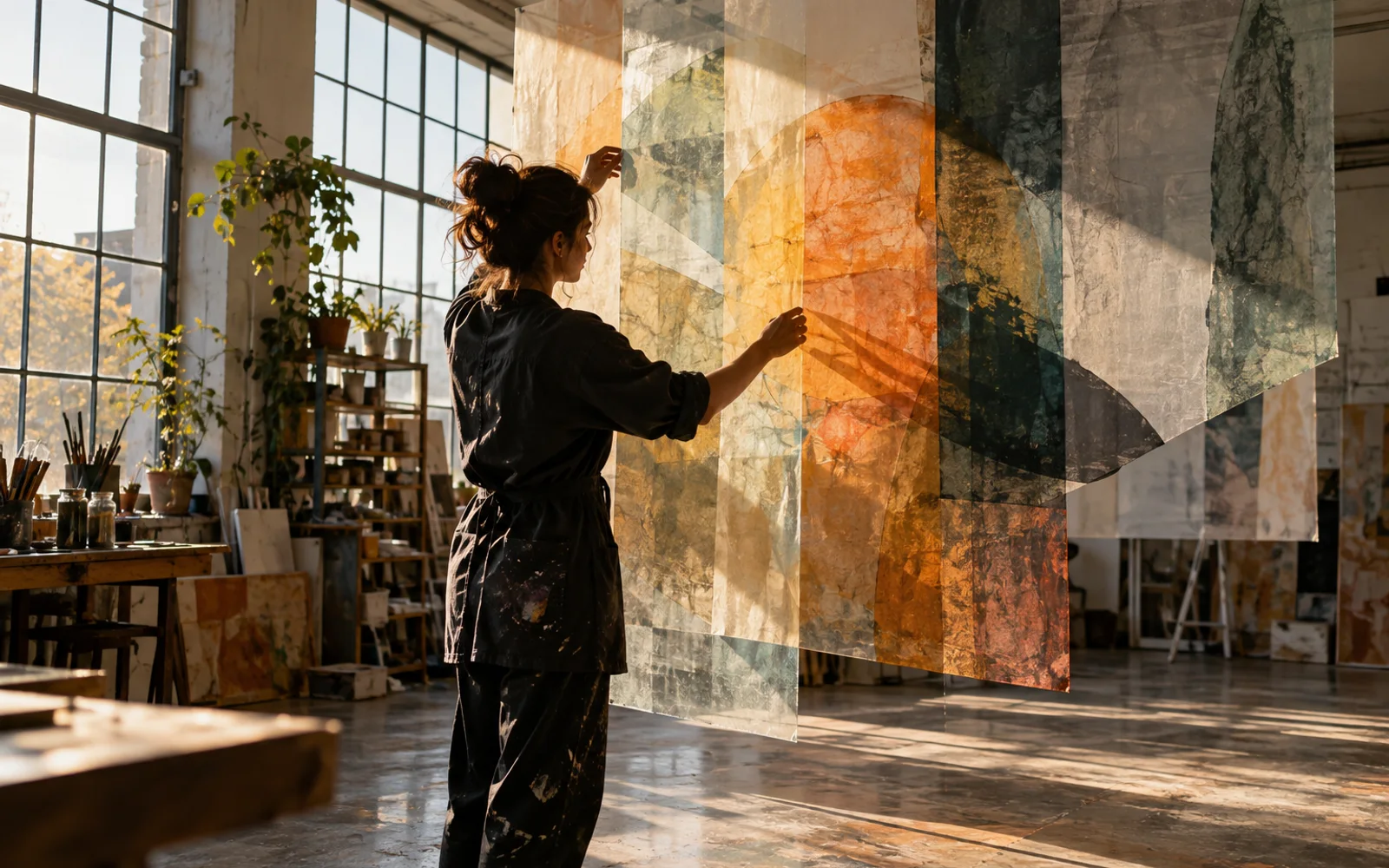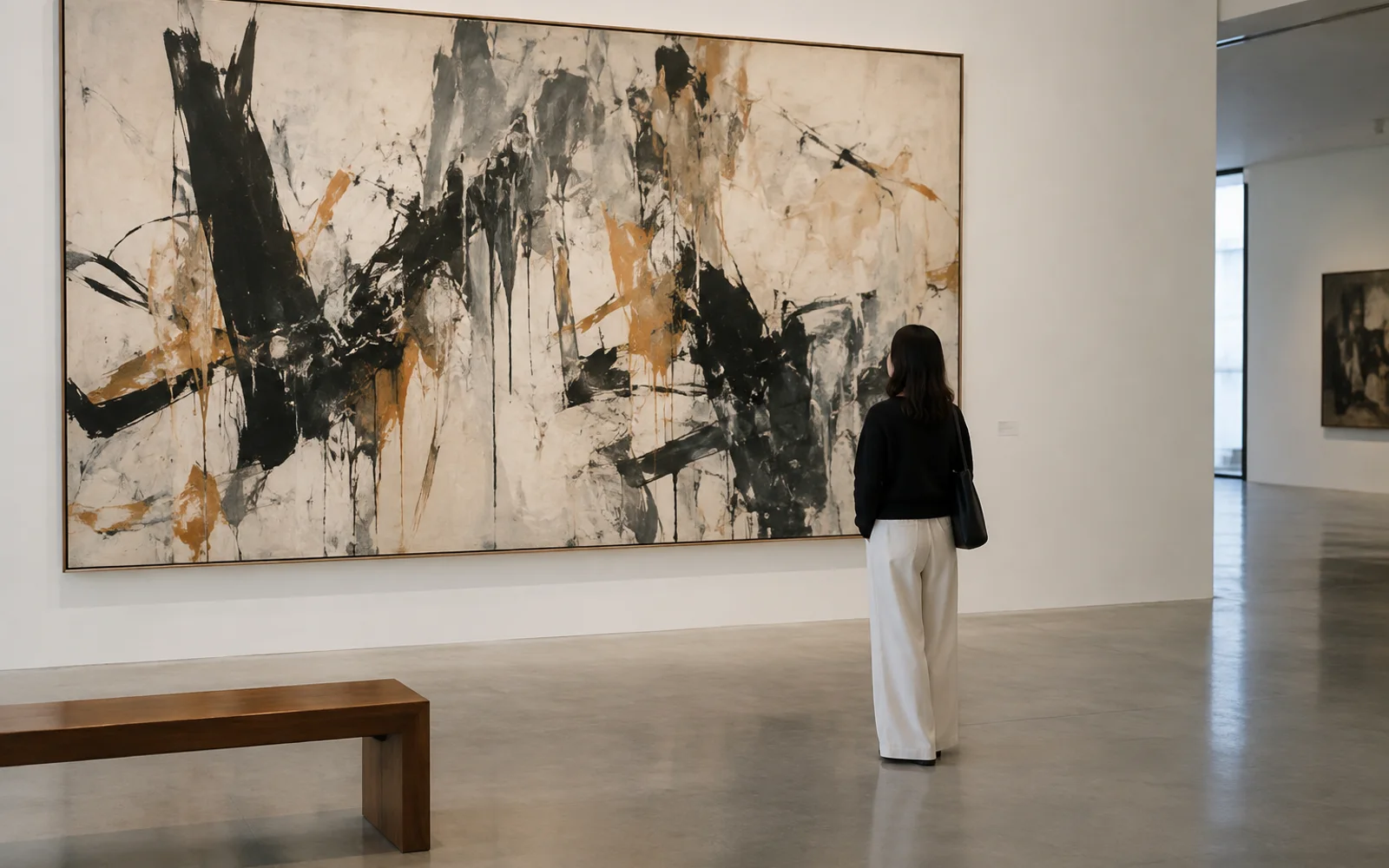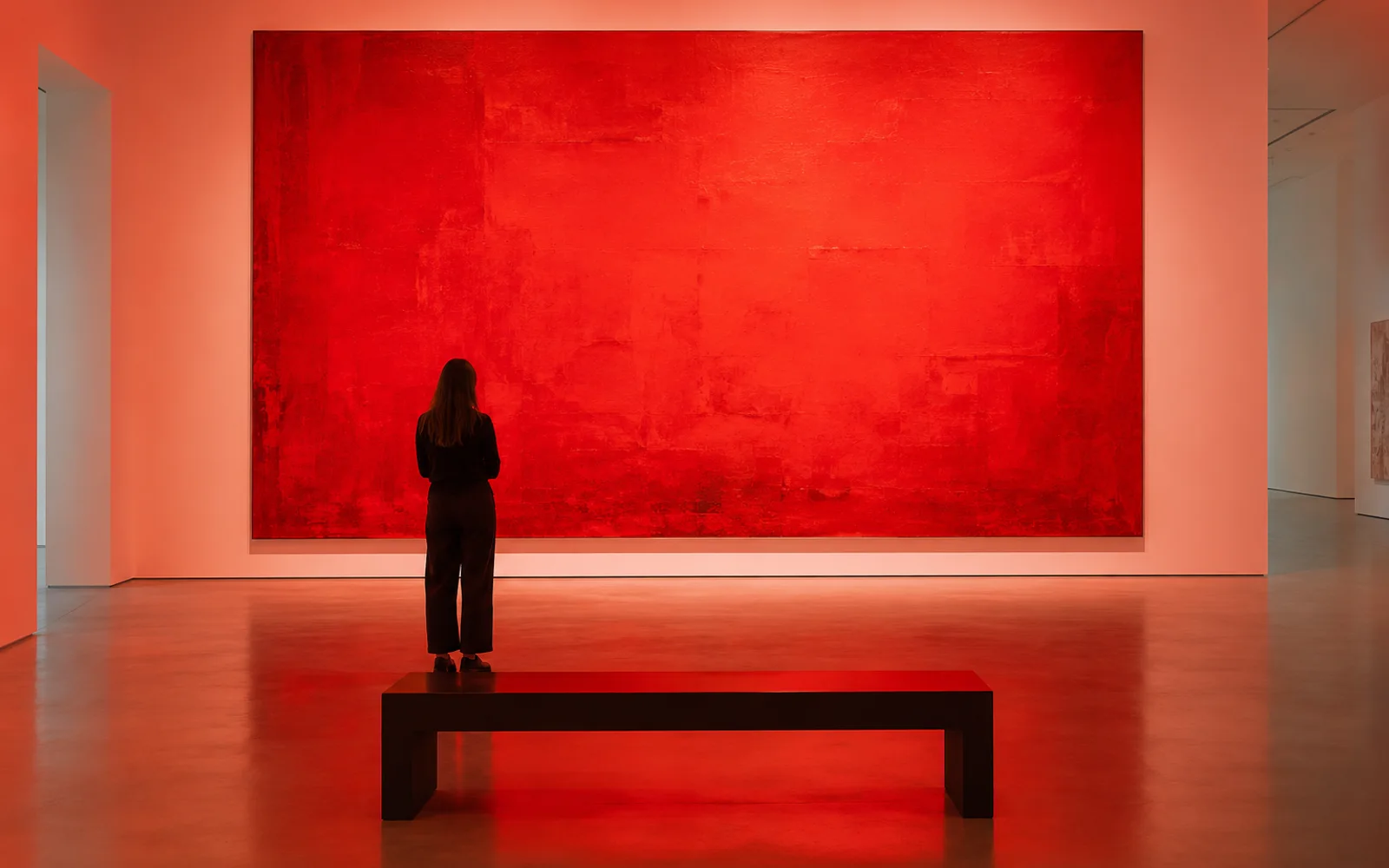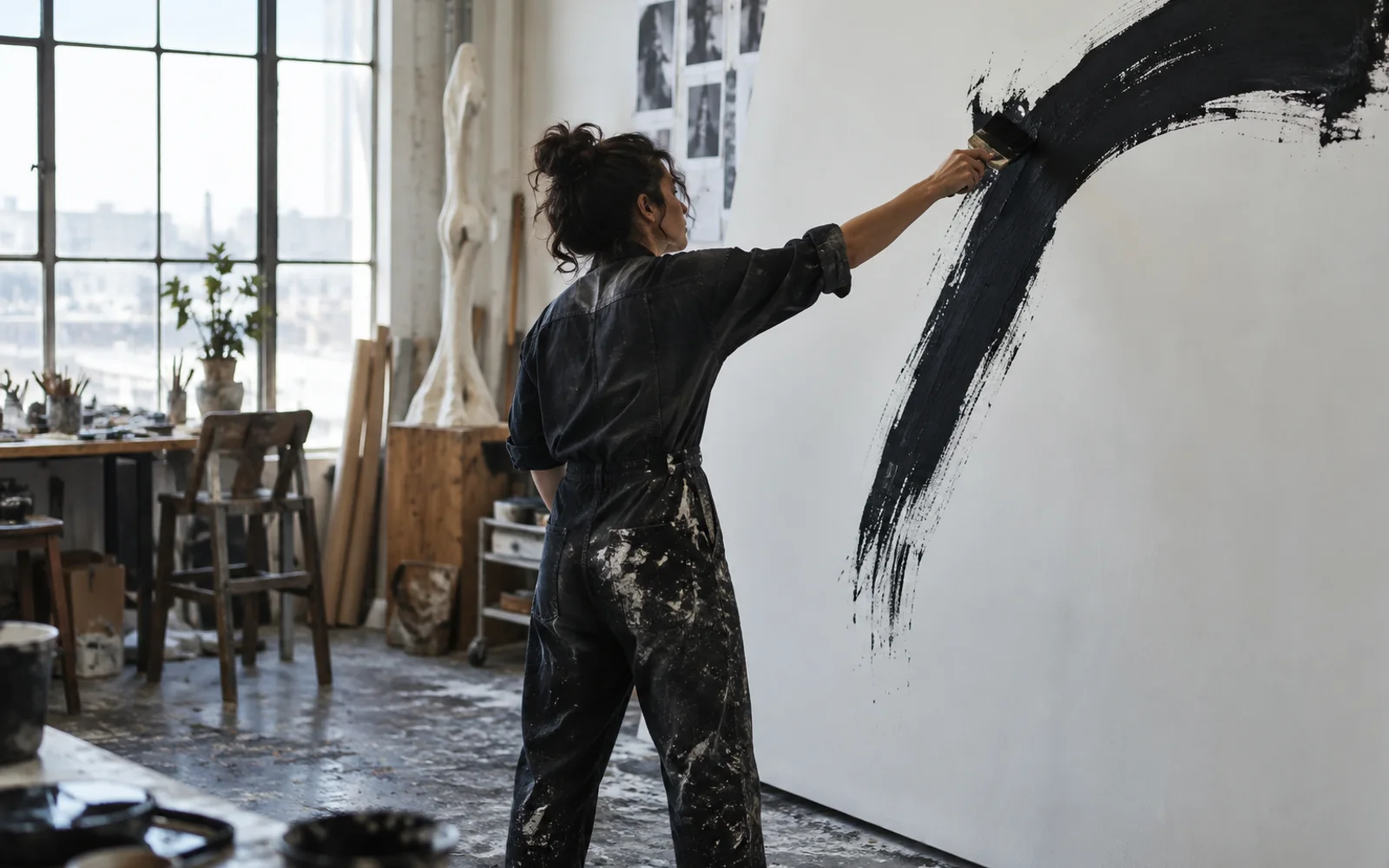
Some works reveal their meaning only when the viewer changes position. ARKI Editorial
WALKING AROUND A SCULPTURE
Some works reveal their meaning only when the viewer changes position.
The first side is not the whole
A sculpture may offer a striking silhouette from the door and an entirely different shape from behind. Resist the urge to settle on the first view. Walk slowly, keeping a respectful distance, and notice where an opening appears or a surface closes.
The work directs your body as well as your eye. Unlike a photograph, it cannot be held still in a single frame without losing the experience of moving around it.
What the material tells us
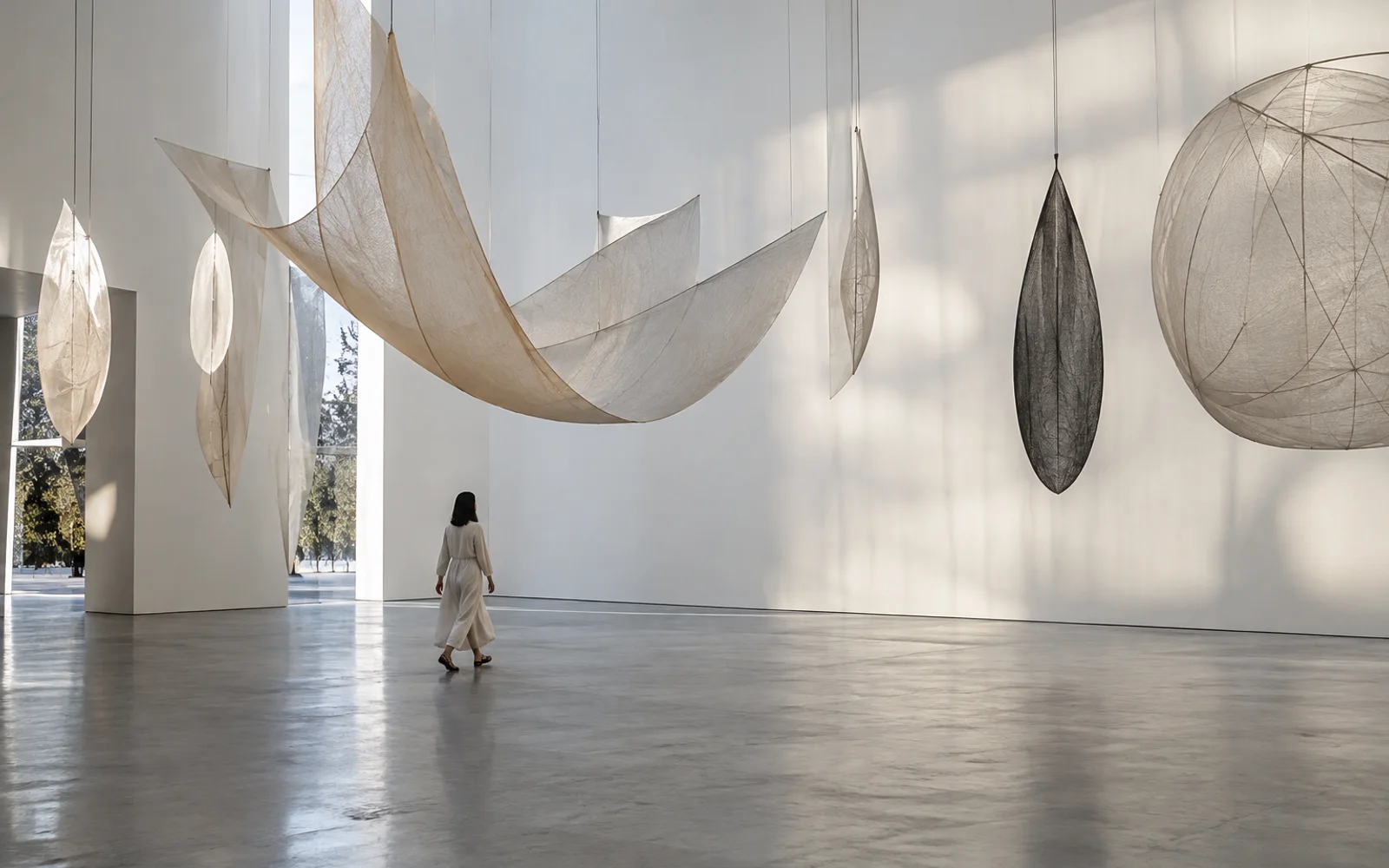
Stone, metal, fabric, and wood carry different expectations of weight and touch. A polished surface may reflect the room; a rough one can hold shadows in every mark. Look at how the material was joined or balanced.
Even without touching, you can sense the physical decisions behind the work. The sculptor’s chosen material is not a neutral container for an idea. It is one of the voices through which the idea becomes visible.

Finding your scale
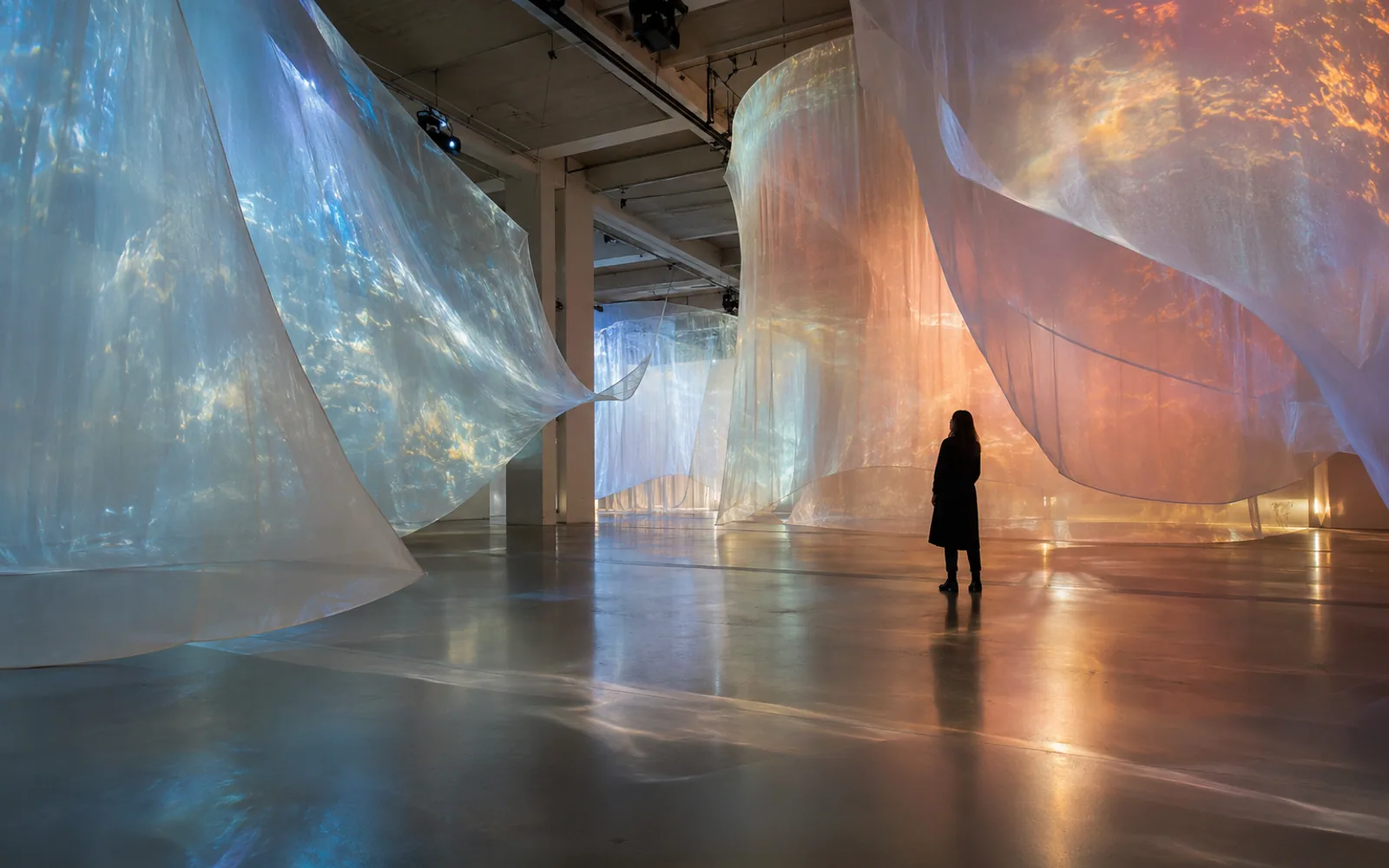
Stand close enough to see a detail, then step back to include the room. A small object can feel monumental on a low plinth; a large form can seem intimate when it creates a sheltered space. Your own height and route become part of the encounter.
That variability is not a flaw in interpretation. Sculpture asks us to discover how meaning changes with distance, movement, and the presence of other people.
A view to carry away
Leaving the room, you may remember an angle that no photograph in the catalog shows. That view belongs to your route through the work.
It can be shared in words, but it cannot be completely transferred. The need to walk, pause, and turn is part of what makes sculpture a physical encounter rather than an image alone.
- Move around the work before choosing a favorite view.
- Watch how material catches light and joins together.
- Change distance to understand its scale.
A sculpture gives a different answer each time we move.
— ARKI Editorial