
How one carefully adjusted seam can change a silhouette and our relationship with a garment. ARKI Editorial
THE QUIET POWER OF A TAILOR'S STUDIO
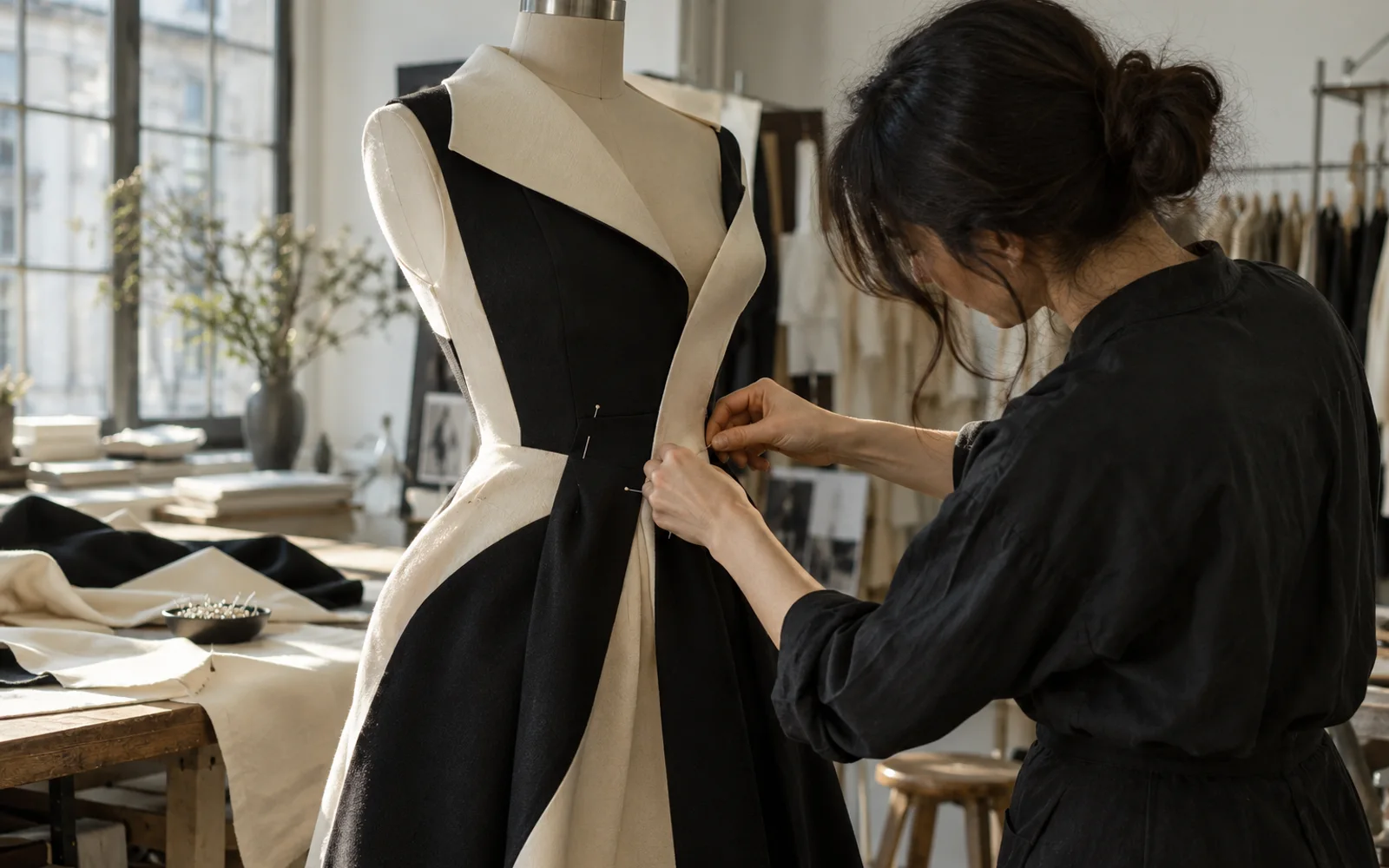
How one carefully adjusted seam can change a silhouette and our relationship with a garment.
Size is not just a number
The size of the finished garment is a guess about the average body. A real person has his or her shoulder line, gait, and comfort limits. That's why a jacket that almost fit in the shop leaves a completely different impression after a little correction.
A tailor does not force the material onto the body, it finds an agreement between them. You often feel that agreement in movement before you see it in a mirror.

A Conversation with Fabric
The most interesting question in the atelier is sometimes what is not worth doing. Not all old coats can be shortened so as not to be out of proportion; not all trousers have enough spare fabric to let out.
A good specialist will tell you these limitations directly and offer you a better way. Such dialogue teaches you that garments have a structure and a history to be treated with respect.

The Long Life of a Better Fit
When an item fits the body, it appears more often in everyday decisions. That's why a small adjustment is sometimes more valuable than a new purchase.
The same jacket will also be useful for a work meeting and an evening walk if you recognize yourself in it. The quiet power of an atelier is that it gives your favorite items extra years of use, bringing precision to a wardrobe instead of more volume.
A Relationship with a Craftsperson
Returning to the atelier often teaches you more than a one-time order. When a tailor is familiar with your movement and your favorite shapes, the discussion of the next alteration becomes more specific. It's helpful to say when and how you plan to wear an item at the first fitting, rather than just where it feels tight.
Everyday trousers need a different freedom than a rarely worn suit. Try on the finished garment and discuss any small differences right away. This talk honors the work of a professional and teaches you what a good fit really means.
- Try the item in motion.
- Review the amendment boundaries in advance.
- A small change to your favorite item is often enough.
The fit garment doesn't scream; it just moves with you.
— ARKI Editorial