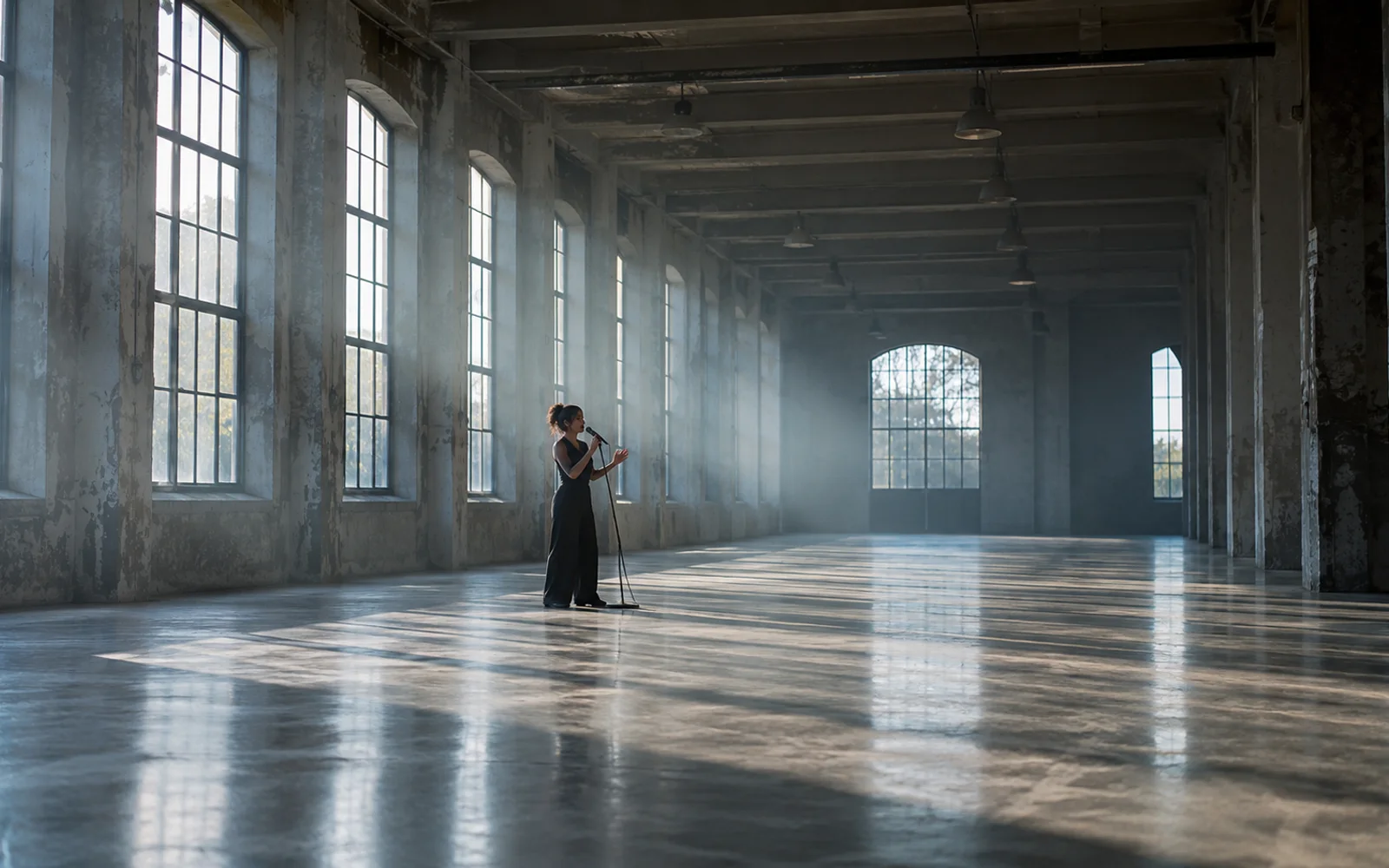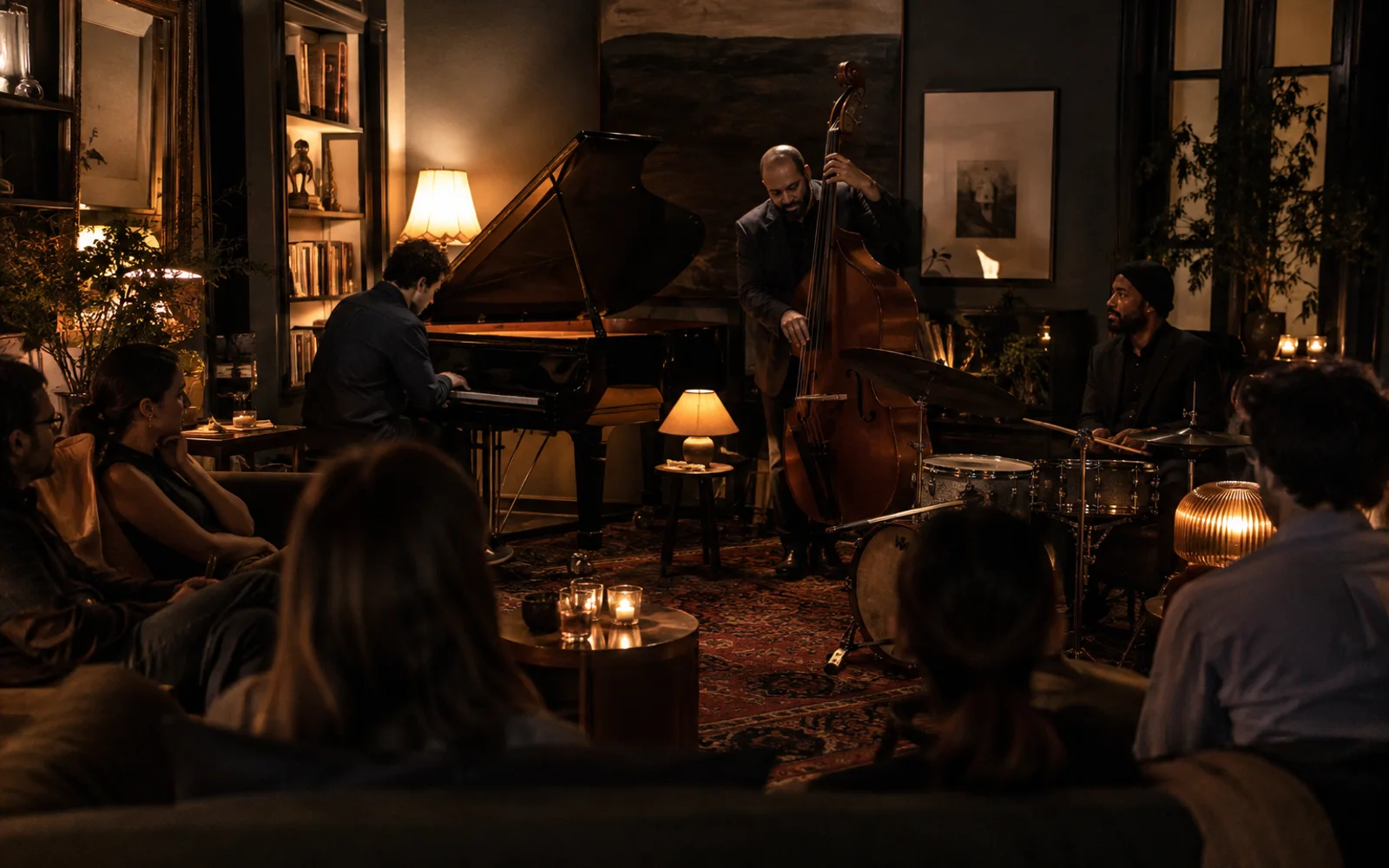
A band’s relationship can be heard most clearly in the small space where it rehearses. ARKI Editorial
THE ENERGY OF A LIVE ROOM
A band’s relationship can be heard most clearly in the small space where it rehearses.
Before everybody begins
A rehearsal room has a particular noise before the song starts. Someone tunes a string, somebody else checks a cable, and a drummer tests a pattern that may never enter the final arrangement. These ordinary sounds reveal how a group works together.
Who leaves space? Who notices that another person is not ready? The performance begins with those quiet negotiations, long before anyone counts in.

One second of stopping
A band that can stop together can often play together more freely. When a passage fails, repeating it immediately may only make the same mistake louder. Pause, name what went wrong, and listen to the person whose part was buried.
A useful rehearsal is not a contest over who had the correct idea first. It is a room where an idea can change when it meets other people’s timing and attention.


The last take
At the end of a long session, the group may finally play the song without thinking about every seam. The recording can catch an energy that a polished studio version later struggles to recreate. That does not mean the last take should automatically be released.
It can serve as a reference for what matters: a glance before a change, a shared breath, a chorus arriving together. The room has taught the band how to hear itself.
What travels to the stage
A concert has lights, distance, and strangers; a rehearsal room has none of that. Still, the habits formed in close quarters travel with the band.
Musicians who know when to make space for one another can carry the warmth of a small room into a much larger one. The audience may never see the rehearsal, but it can hear its results.
- Listen to the room before the count-in.
- Pause to understand a problem rather than only repeating it.
- Keep a rehearsal take as a record of shared energy.
A live room teaches musicians to listen to one another before the audience arrives.
— ARKI Editorial