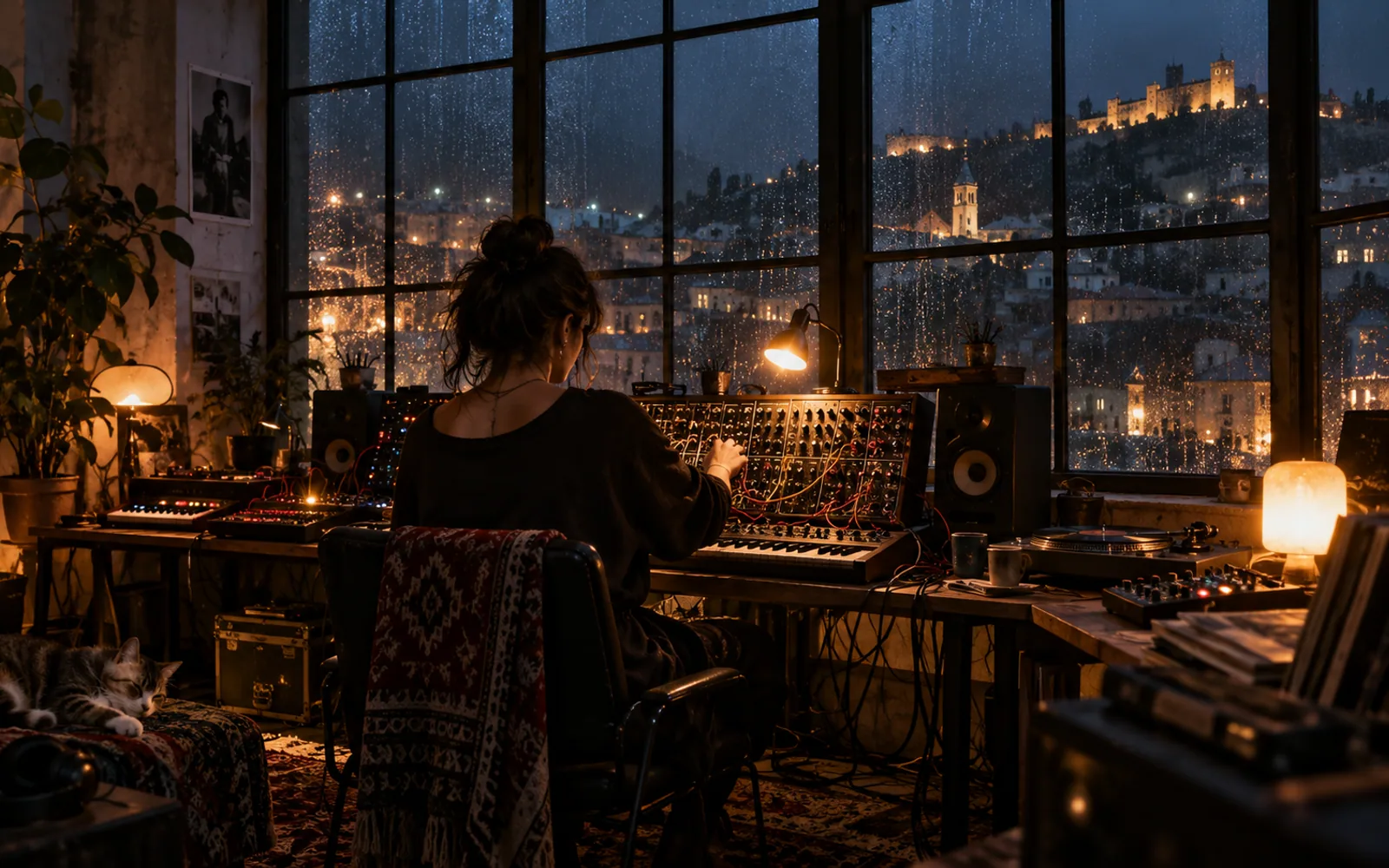
Music made in a small room often turns its limitations into a recognizable voice. ARKI Editorial
THE BEDROOM AS A STUDIO
Music made in a small room often turns its limitations into a recognizable voice.
The first address of a sound
A bedroom is rarely designed for recording. Blankets soften reflections, a desk doubles as a control surface, and a neighbor’s schedule sets unexpected limits. Yet that intimacy can be a strength.
A singer may try a line more honestly when there is no audience beyond the door. The first version of a song does not need to pretend it was made in a larger room. Its scale can tell us something about the person inside it.
Tools in ordinary life
The laptop shares space with books and a glass of water; headphones must be packed away before sleep. This overlap between creative work and daily life can encourage short, repeated sessions. It can also make rest difficult.
Set a clear place for files, keep backups, and decide when the room stops being a studio for the evening. Technical discipline protects the fragile freedom to experiment, especially when no engineer or producer is standing nearby to organize the session.

Invite another ear
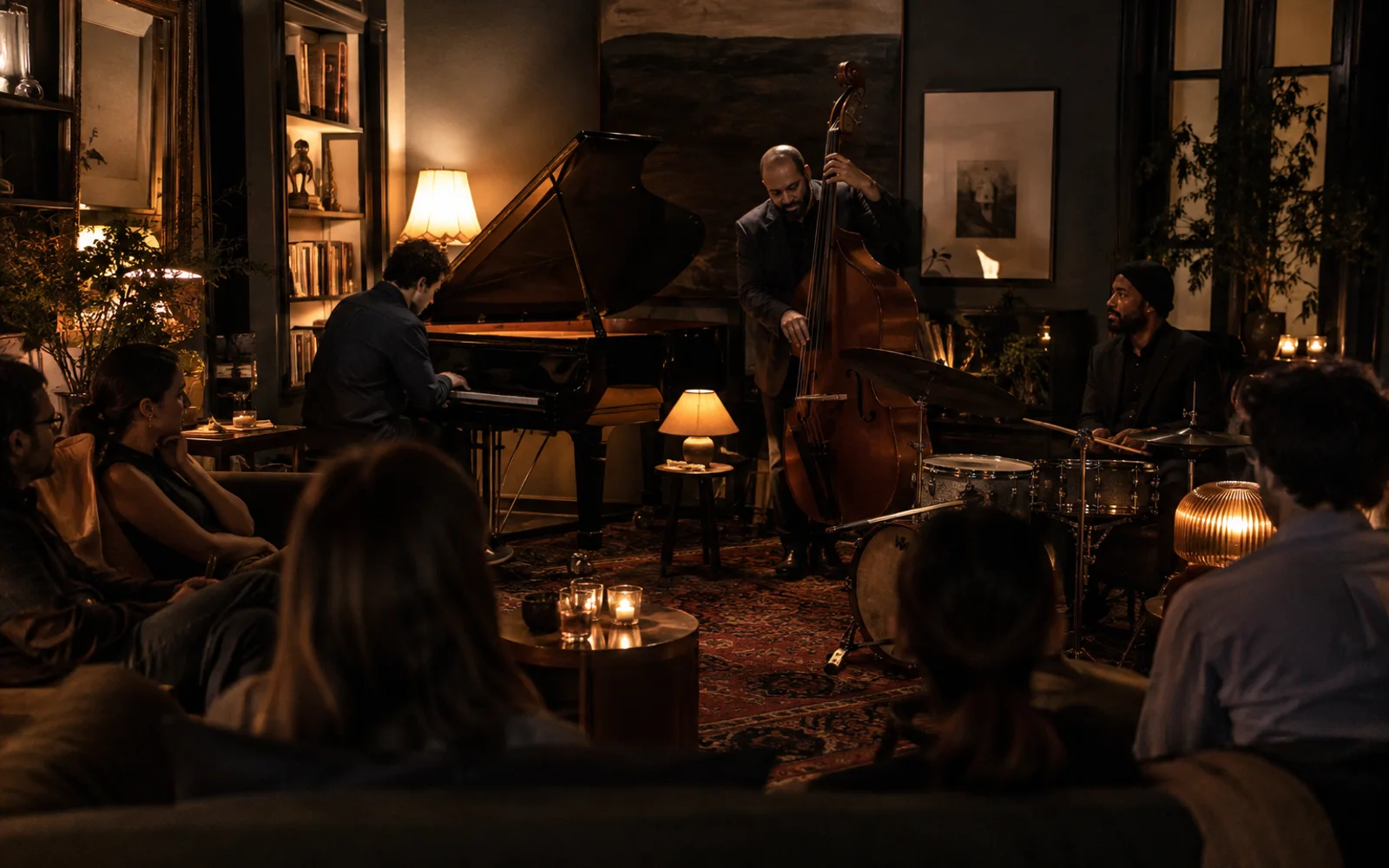
Working alone makes it easy to mistake familiarity for clarity. Play the draft for a trusted listener and ask what they remember, rather than whether they simply like it. A surprising answer may reveal that the quietest part is the most compelling.
Collaboration does not have to erase the bedroom’s character. Another ear can help identify which rough edges belong to the song and which are only the result of limited time or equipment.
When the door opens
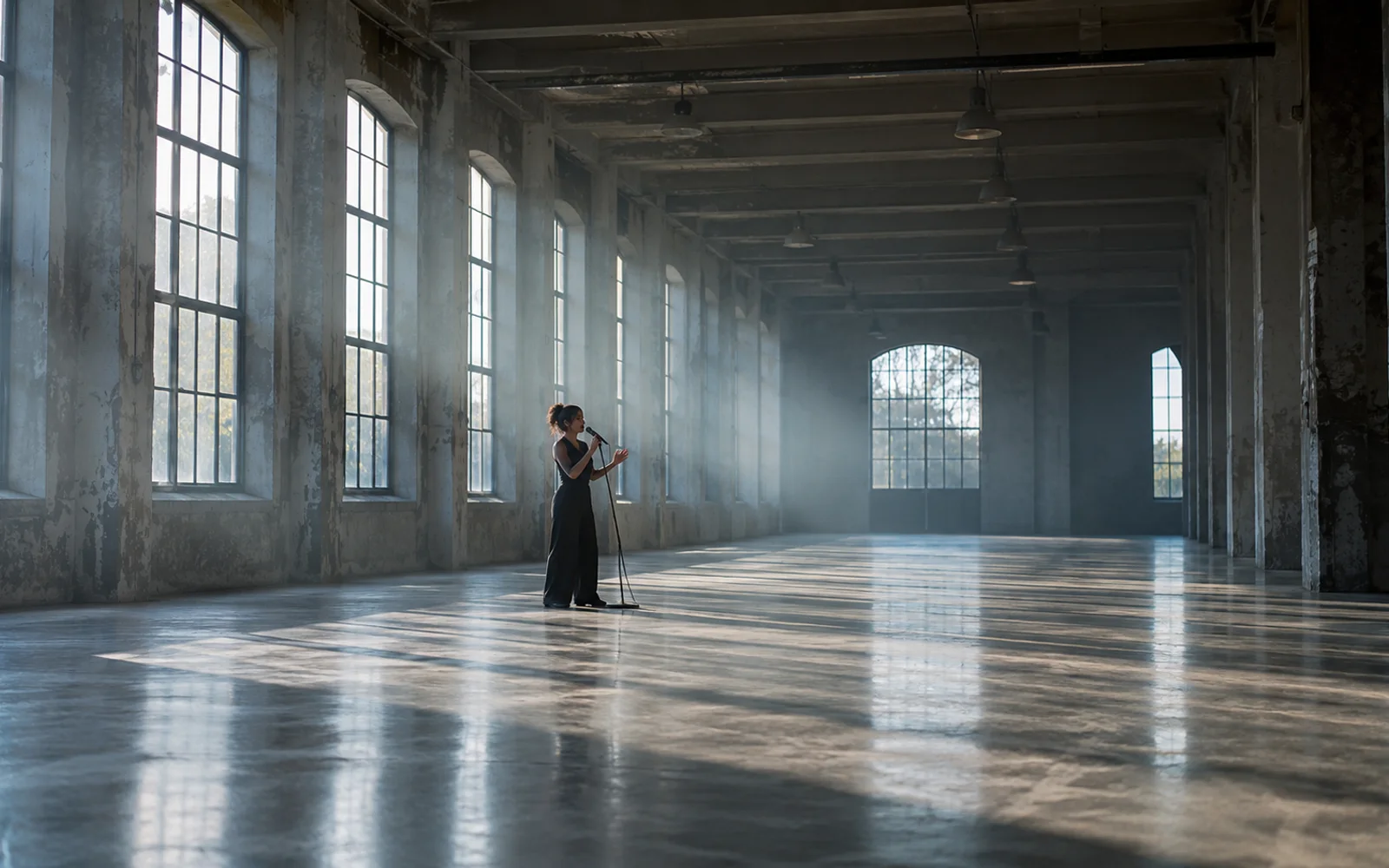
Eventually the song leaves the room where it began. It may be played on a phone speaker, in a car, or at a show.
If its emotion survives those changes, the scale of the first studio hardly matters. The aim is not to hide its modest beginning, but to know which parts of that beginning made the music possible.
- Use the room’s character intentionally.
- Back up files and protect time for rest.
- Ask a listener what stays with them after the first play.
A small room can hold a sound large enough to travel.
— ARKI Editorial