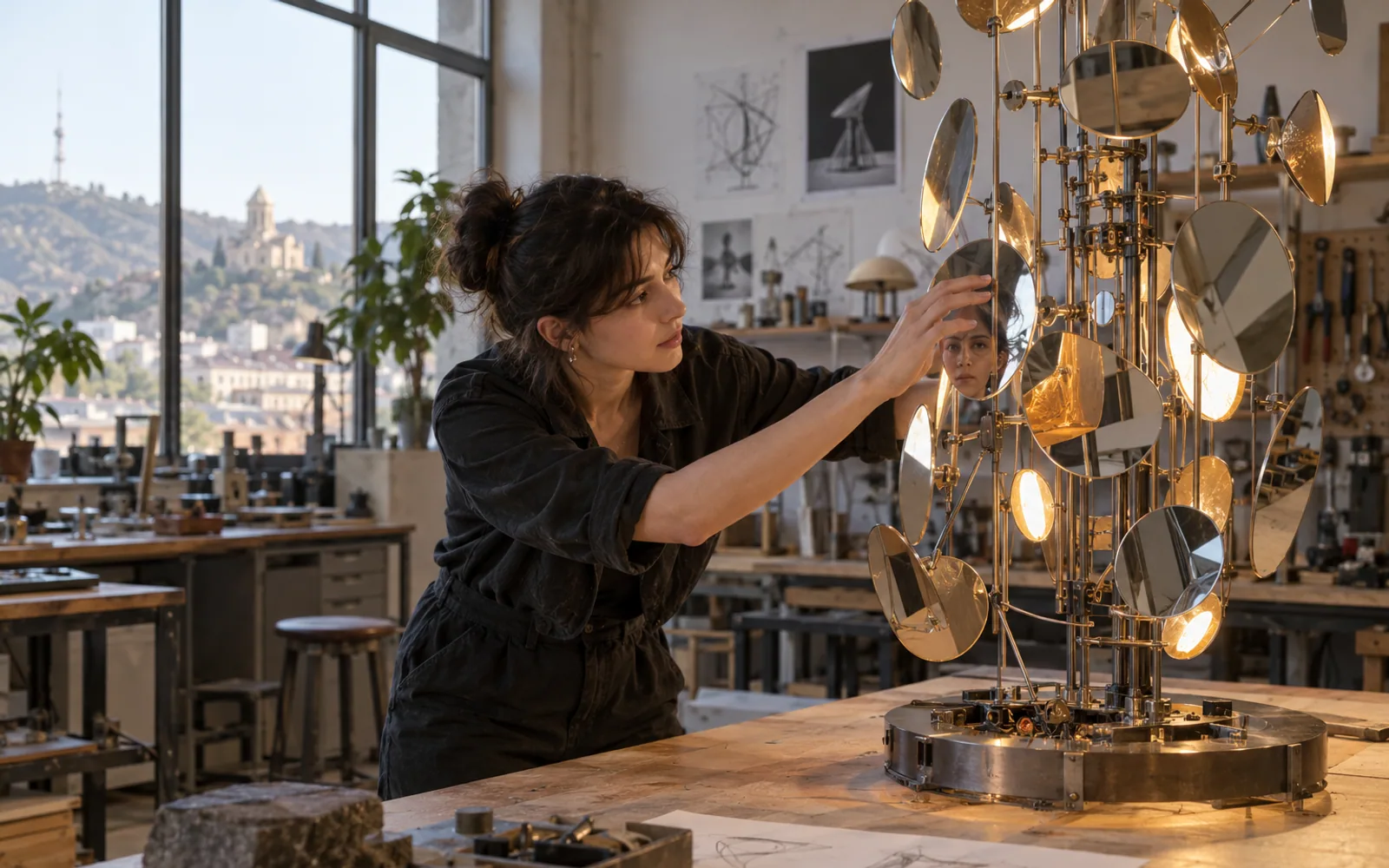
New tools change work, while attention, boundaries, and cooperation remain its human foundation. ARKI Editorial
THE DESK OF THE FUTURE
New tools change work, while attention, boundaries, and cooperation remain its human foundation.
Too many tools
A working day can involve a dozen tabs, messages, calendars, and systems that all promise to save time. Each has a cost when it pulls attention away from the task. Before adding another tool, ask what problem it solves and what it asks people to maintain.
A calmer desk may be defined less by futuristic equipment than by clear priorities and fewer interruptions. Technology should support the work rather than constantly announce itself.
New ways of being together
Teams can collaborate from different rooms and time zones, but shared work still needs context. A written decision, a clear handoff, and a chance to ask questions prevent distance from becoming confusion. Some conversations are easier face to face; others improve when people can think before replying.
The future workplace should allow more than one rhythm of cooperation. It should make room for both focused solitude and useful company.


The right to finish
When work lives on portable devices, the desk follows us home. A healthy boundary must be designed as deliberately as an efficient workflow. Agree when a response is urgent, when it can wait, and how people know a task is complete for the day.
These rules are not resistance to progress. They protect the attention and rest that make thoughtful work possible tomorrow.
What remains on the table
The devices on a desk will change again. A notebook, a shared question, and the need to understand another person may remain.
Planning for those durable needs is a better guide than guessing which screen will arrive next. Good work environments help people use tools with purpose and then put them down.
- Keep tools that solve a real problem.
- Make decisions and handoffs easy to find.
- Agree on a clear end to the workday.
The future desk should make human attention easier to keep.
— ARKI Editorial