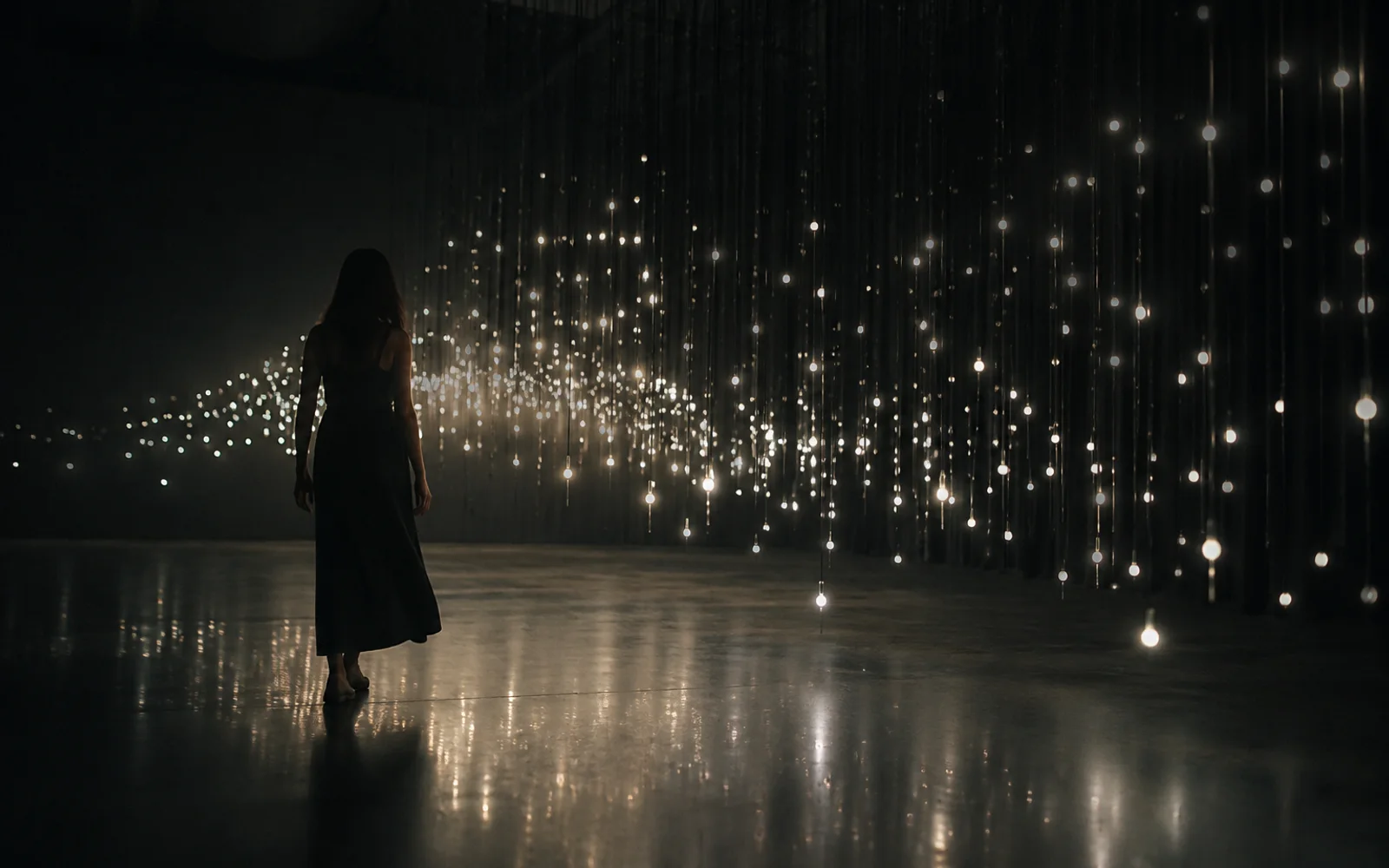
An interactive installation can make technology a quiet, physical part of an encounter. ARKI Editorial
LIGHT AND CODE
An interactive installation can make technology a quiet, physical part of an encounter.
When an object responds
A light changes as a visitor approaches, and a still room begins to feel alert. The response may be powered by sensors and code, but the first experience is physical: a step, a pause, a shift in color. Good interactive work lets that relationship be understood without an instruction manual.
The visitor should be able to explore, hesitate, and notice that their presence matters. Technology becomes a material in the room rather than a spectacle placed in front of it.

The labor we do not see
A gentle effect can depend on careful wiring, testing, calibration, and many revisions. The artist and technical team decide what happens when several people enter at once, when a sensor misses a movement, or when daylight changes the space.
Those edge cases shape the artwork as surely as the visible form. The system needs to be reliable enough for visitors to trust it and simple enough for its behavior to remain legible.

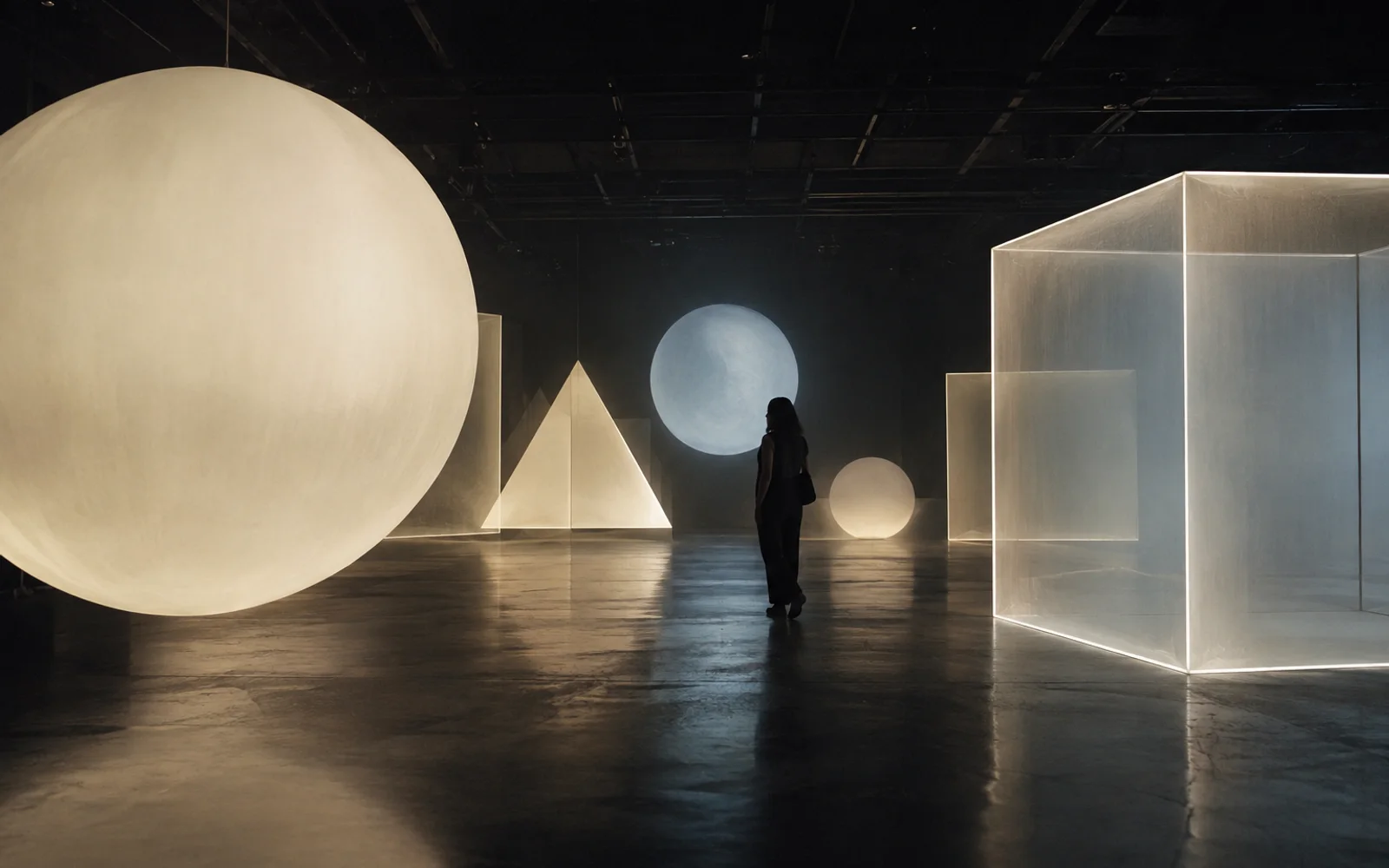
Keep the person in the work
Interaction is meaningful only when it gives the visitor a role worth having. A button that makes a light blink is not automatically a dialogue.
Consider what choice the person can make, what the installation gives back, and whether the response respects different bodies and speeds. The strongest digital artwork often leaves room for a human question that the code cannot answer for us.
After the lights go out
The memory of an installation may be less about its equipment than about a moment of recognition: a visitor moved, and the room changed. That simple exchange can make complex technology feel approachable.
It also invites artists to ask what else a space might notice, and what it should leave alone.
- Make the physical response easy to discover.
- Test the work with more than one visitor.
- Give interaction a purpose beyond novelty.
Code becomes a material when people can feel a meaningful response.
— ARKI Editorial